

If your face turns red ten minutes after applying sunscreen, you’re not alone. Sensitive skin reacts badly to chemical filters like oxybenzone and octinoxate. Those same chemicals are also banned in Hawaii, Key West, and Palau for damaging coral reefs. So here’s the real question: can you find a sunscreen that protects both your skin and the ocean without leaving you looking like a ghost? Yes. But you have to know what to look for.
What Makes a Sunscreen Reef-Safe and Skin-Safe?
Two things separate reef-safe sunscreens from the rest: the active ingredients and the particle size. Chemical sunscreens absorb UV rays and convert them to heat. Mineral sunscreens sit on top of your skin and reflect UV light. For sensitive skin, mineral is almost always better. Less absorption means less irritation.
Non-Nano Zinc Oxide Is the Gold Standard
Zinc oxide is the only active ingredient that blocks both UVA and UVB rays without stinging. But particle size matters. Nano-sized particles (under 100 nanometers) can be absorbed by coral and may cause bleaching. Non-nano particles (over 100 nm) stay on the surface. Look for non-nano zinc oxide on the label. Badger SPF 30 Clear Zinc uses non-nano particles and lists 18.75% zinc oxide. Price: around $16 for 2.9 oz.
Titanium Dioxide: Good but Incomplete
Titanium dioxide blocks UVB well but leaves a gap in UVA protection. Many mineral sunscreens combine it with zinc oxide to fill that gap. Blue Lizard Sensitive SPF 50+ uses both: 10% zinc oxide and 5% titanium dioxide. The bottle changes color in UV light — a handy reminder to reapply. Runs about $14 for 5 oz.
Avoid any sunscreen with oxybenzone, octinoxate, octocrylene, or homosalate. These are the chemicals linked to coral bleaching and skin irritation. The easiest way to check: if it’s clear and runny, it’s probably chemical. If it’s thick and white, it’s mineral.
3 Common Mistakes That Ruin Reef-Safe Sunscreen

Even the best mineral sunscreen fails if you use it wrong. Here are the three biggest screw-ups.
Mistake 1: Not Shaking the Bottle
Mineral sunscreens separate over time. Zinc oxide settles at the bottom. Shake for at least 10 seconds before every application. Skip this step and you’re basically applying lotion with half the SPF.
Mistake 2: Applying Too Thin
Most people apply 25-50% of the recommended amount. You need 1/4 teaspoon for your face and neck. That’s roughly two finger-length lines. For your body, a shot glass full. Thinkbaby SPF 50 comes in a 6 oz tube ($13) — that’s about 12 applications for full body use. If a bottle lasts you all summer, you’re not using enough.
Mistake 3: Relying on Spray Sunscreens
Spray sunscreens are convenient but hard to apply evenly. Wind blows half the product away. You inhale the rest. For reef-safe protection, stick to lotions or sticks. All Good SPF 30 Sport Sunscreen Butter ($15 for 3 oz) comes in a solid stick format. Easy to apply, no aerosol, and it’s water-resistant for 80 minutes.
Best Eco-Friendly Sunscreens for Sensitive Skin: 2026 Picks
These four sunscreens passed our criteria: non-nano mineral actives, no chemical filters, fragrance-free or naturally scented, and SPF 30 or higher. Prices checked in January 2026.
| Product | Active Ingredients | SPF | Price | Best For |
|---|---|---|---|---|
| Badger SPF 30 Clear Zinc | 18.75% non-nano zinc oxide | 30 | $16 (2.9 oz) | Face, daily wear |
| Blue Lizard Sensitive SPF 50+ | 10% zinc oxide + 5% titanium dioxide | 50+ | $14 (5 oz) | Body, beach days |
| Thinkbaby SPF 50 | 20% non-nano zinc oxide | 50 | $13 (6 oz) | Family, kids |
| All Good SPF 30 Sport Butter | 22% non-nano zinc oxide | 30 | $15 (3 oz) | Active use, hiking |
Badger SPF 30 Clear Zinc is my pick for daily face use. It rubs in better than most mineral sunscreens and leaves a subtle glow, not a white cast. The zinc oxide percentage is lower than some competitors, but SPF 30 is sufficient for daily commutes and office windows.
When NOT to Buy a Mineral Sunscreen

Mineral sunscreens aren’t perfect for everyone. Here’s when you should look elsewhere.
You Have Very Dark Skin
Non-nano zinc oxide leaves a white cast. It’s less noticeable with newer formulas, but on Fitzpatrick skin types V and VI, it can look ashy. Supergoop! Unseen Sunscreen SPF 40 ($34 for 1.7 oz) uses chemical filters but is fragrance-free and formulated for sensitive skin. It’s not reef-safe in the strictest sense, but it’s a compromise for people who can’t tolerate mineral texture.
You Need SPF 100+
SPF 50 blocks 98% of UVB rays. SPF 100 blocks 99%. The difference is marginal, but SPF 100 mineral sunscreens require very high zinc concentrations — often over 25%. That means thicker texture and more white cast. Neutrogena Sheer Zinc SPF 50 ($12 for 3 oz) is a better choice than chasing triple-digit numbers. It uses 21.6% zinc oxide and feels lighter than most.
You Swim for Hours in Strong Currents
Mineral sunscreens are water-resistant for 40-80 minutes. After that, they wash off. If you’re snorkeling or surfing for two hours, you’ll need to reapply. All Good SPF 30 Sport Butter lasts 80 minutes, but no mineral sunscreen is truly “waterproof.” Bring a travel-size tube in your bag.
How to Read a Sunscreen Label Like a Pro
Brands love greenwashing. “Reef-friendly” and “natural” mean nothing legally. Here’s what actually matters.
Check the Active Ingredients Panel
Flip the bottle to the back. The active ingredients list is required by the FDA. If you see zinc oxide or titanium dioxide only, it’s a mineral sunscreen. If you see oxybenzone, octinoxate, octocrylene, or avobenzone, it’s chemical. Brands like COSRX Aloe Soothing Sun Cream ($16 for 1.7 oz) list zinc oxide as the sole active — that’s a good sign. But some Korean sunscreens use nano particles, so check for “non-nano” on the front.
Look for the “Non-Nano” Claim
Non-nano particles are larger than 100 nanometers. The label should say “non-nano zinc oxide” or “non-nano titanium dioxide.” If it just says “zinc oxide,” assume it’s nano. Badger and All Good clearly state non-nano on their packaging. Blue Lizard does not use the term on its Sensitive bottle, but independent testing confirms particles above 100 nm.
Ignore “SPF in Moisturizer” Claims
Moisturizers with SPF rarely provide adequate protection. You’d need to apply a thick layer to get the labeled SPF — and nobody does that. Use a dedicated sunscreen. Beauty of Joseon Relief Sun SPF 50+ ($18 for 1.7 oz) is a lightweight moisturizer-sunscreen hybrid that actually works because it’s formulated as a sunscreen first. It uses 30% rice extract and zinc oxide. No white cast. No irritation.
Final Verdict: Which Sunscreen Should You Buy?
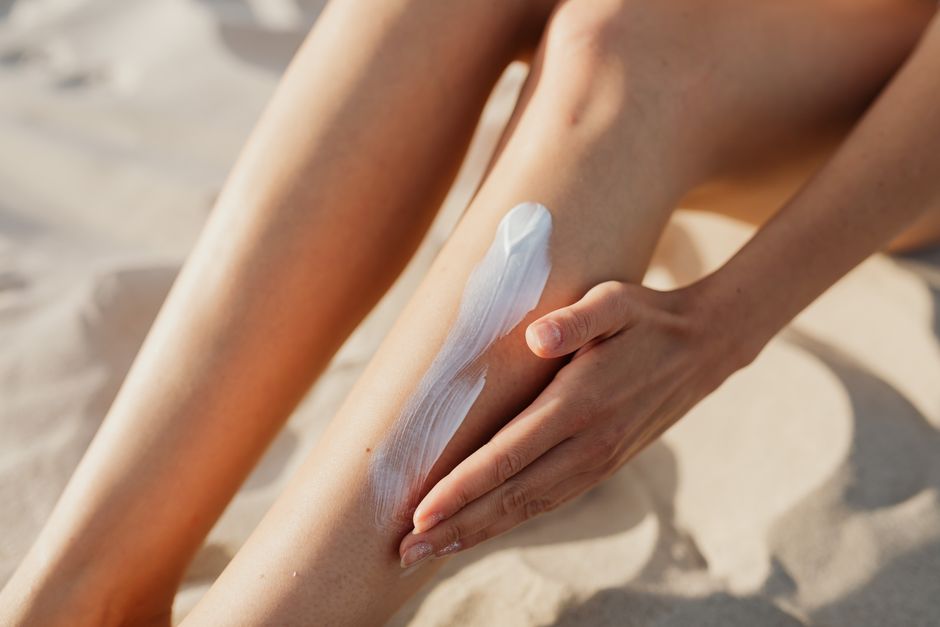
For most people with sensitive skin who care about reef safety, the choice is clear.
- Daily face use: Badger SPF 30 Clear Zinc ($16). Rubs in well, low white cast, non-nano.
- Beach and body: Blue Lizard Sensitive SPF 50+ ($14). High protection, affordable, 5 oz lasts.
- Active outdoor sports: All Good SPF 30 Sport Butter ($15). Solid stick, 80-min water resistance.
- Family or kids: Thinkbaby SPF 50 ($13). 6 oz tube, no fragrance, high zinc concentration.
- Dark skin that hates white cast: Supergoop! Unseen SPF 40 ($34). Not reef-safe, but fragrance-free and invisible.
If you buy only one, get the Badger SPF 30 Clear Zinc. It’s the best balance of protection, texture, and reef safety for daily wear. Apply 1/4 teaspoon to your face every morning. Shake well. Your skin and the coral will thank you.
