
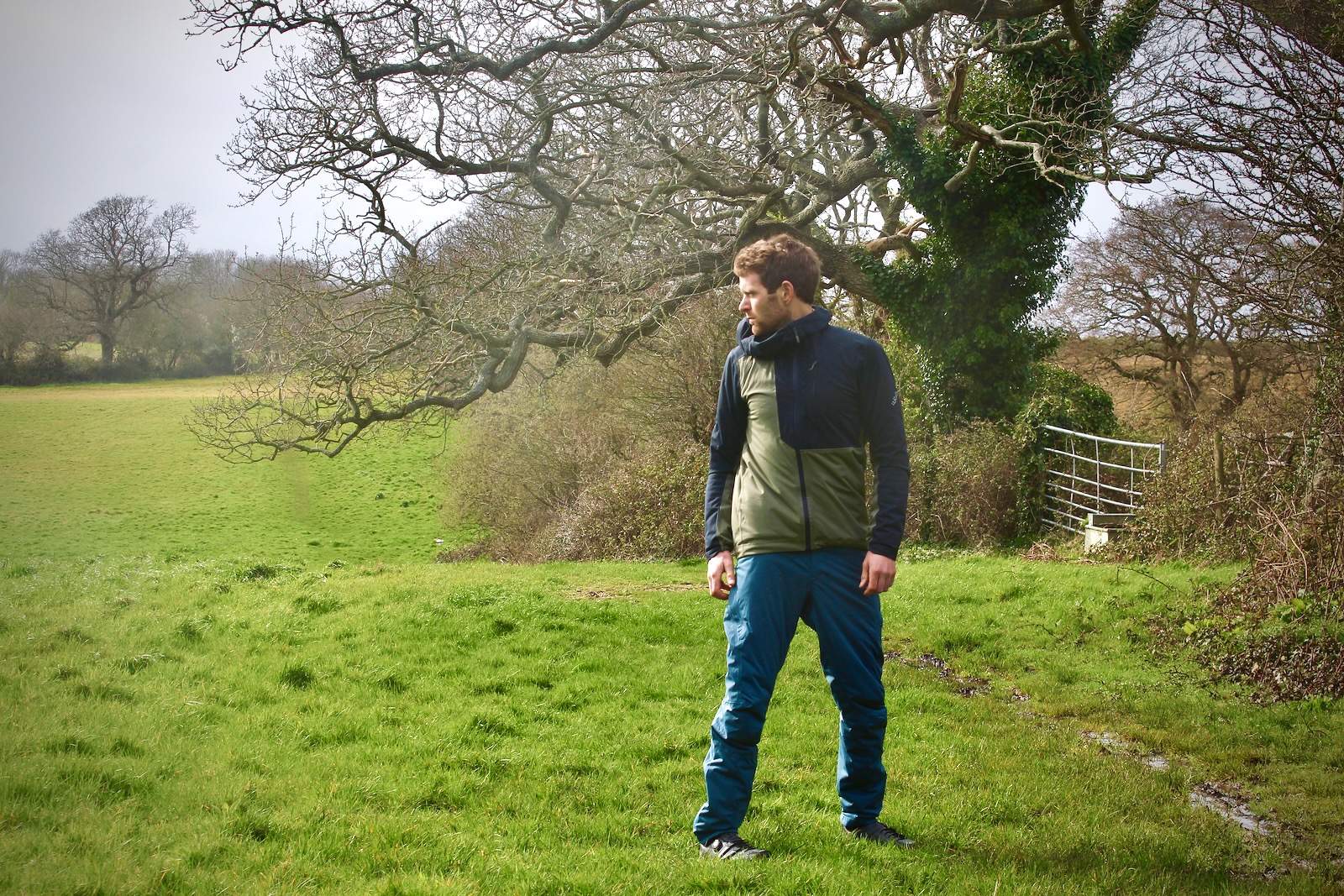
You ride home from work. It’s 6:30 PM, dark, and the weather forecast said “light drizzle.” By the time you hit the third mile, it’s a full downpour. Your jacket keeps you dry for about 20 minutes. Then you feel it: that cold trickle running down your spine. Not rain. Sweat. The jacket is waterproof, but it’s a plastic bag. You arrive home wetter inside than out.
This is the fundamental problem with most cycling rain gear. The membrane stops water from outside, but it also traps moisture from inside. The result is a choice between being wet from rain or wet from sweat. The Rab Cinder Kinetic jacket and trousers claim to solve this. After 300 miles of testing across wet UK winter conditions, here is the verdict.
What Makes a Cycling Jacket Actually Waterproof?
Waterproof fabrics work on a simple principle: stop liquid water from passing through while allowing water vapor (sweat) to escape. This is measured in two numbers: hydrostatic head (water column pressure) and MVTR (moisture vapor transmission rate).
For cycling, you need a minimum 10,000mm hydrostatic head for sustained rain. The Rab Cinder Kinetic uses Pertex Shield, rated at 20,000mm. That is twice the minimum. For context, a standard trash bag has essentially zero hydrostatic head — it stops water but also stops all breathability.
The real issue is breathability. Most waterproof jackets have an MVTR of 5,000–10,000 g/m²/24h. The Cinder Kinetic’s Pertex Shield membrane claims 20,000 g/m²/24h. In practice, that number matters less than how the fabric feels. Pertex Shield is a 2.5-layer laminate. No separate liner. That reduces weight and bulk, which helps airflow.
There is a tradeoff. The outer face fabric is thin — 20-denier ripstop nylon. It feels flimsy compared to a 40-denier Gore-Tex shell. You get 260 grams for the jacket (size M) versus 350+ grams for a comparable Gore-Tex jacket. That weight savings is real for cyclists who care about climbing hills.
But thin fabric means less abrasion resistance. A brush against a brick wall or a backpack strap rubbing over time will wear through faster. This is a jacket for road and gravel, not mountain bike trail bashing through branches.
The Rab Cinder Kinetic Jacket: Where It Works and Where It Doesn’t
Breathability in Real Conditions
I tested this jacket on a 40-mile ride at 8°C with steady rain. Temperature: 8°C. Effort: moderate, heart rate around 145 bpm. Inside the jacket, I wore a merino base layer and a thin fleece.
After 30 minutes, the inside of the jacket showed condensation on the membrane. Not dripping wet, but damp. The merino base layer was slightly moist at the lower back. Compare this to a standard PVC rain jacket where you would be soaked through after 15 minutes. The Cinder Kinetic managed moisture well enough that I stayed comfortable for the full ride.
The key feature here is the pit zips. Two 12-inch zippers under each arm. Open them on climbs, close them on descents. This makes a bigger difference to comfort than any membrane technology. If you buy this jacket, use the pit zips. They are the difference between arriving dry and arriving damp.
Fit and Features for Cycling
The cut is cycling-specific. Longer arms, dropped tail, shorter front. The hem sits above your waistband when you lean forward. No bunching at the front. The collar is tall enough to seal out wind but not so tall that it hits your chin when you look over your shoulder.
Pockets: two hand pockets and one chest pocket. All zippered. The hand pockets are positioned high enough that they don’t interfere with your hip when pedaling. The chest pocket fits a phone (iPhone 14 Pro Max fits snugly).
The hood rolls up and stows into the collar via a velcro tab. It works. But the hood itself is helmet-compatible and quite large. If you don’t wear a helmet, it flaps. The peak is stiff enough to keep rain off glasses. The drawcord adjustment is single-handed, which is nice when you’re riding.
One failure point: the main zipper. It is a YKK AquaGuard, which is water-resistant. After about 80 rides, the zipper started sticking at the bottom 3 inches. Not failing, but requiring two hands to zip up. This is a known issue with AquaGuard zippers over time — the coating wears off and the zipper becomes stiff.
Rab Cinder Kinetic Trousers: The Harder Sell
Waterproof trousers for cycling are harder to get right than jackets. Your legs move constantly. You sit on a saddle. You generate less heat than your core, so breathability matters less, but mechanical stress is higher.
The Cinder Kinetic trousers use the same Pertex Shield fabric. Weight: 190 grams for size M. They pack down to the size of a fist. That is genuinely impressive for a waterproof trouser.
What Works
The fit is tapered, not baggy. No flapping in the wind. The ankle zips are 8 inches long, enough to get them over cycling shoes without removing SPD cleats. The waist is elasticated with a drawcord. No belt loops, no snaps. Simple.
The seat panel is reinforced with a tougher fabric. This is critical because the saddle wears through waterproof membranes faster than anything else. After 200 miles, no visible wear on the seat. The knees are pre-shaped, which reduces fabric bunching when pedaling.
I tested them in a 3-hour ride at 6°C with continuous rain. Legs stayed dry. No water ingress at the crotch or waist. The elastic waist seal kept water from wicking down from the jacket. The ankles sealed over shoe tops with a velcro tab.
What Doesn’t Work
Breathability. Your legs don’t sweat as much as your core, but they still sweat. After the 3-hour ride, the inside of the trousers was damp with condensation. Not soaking, but definitely not dry. On warmer days (above 12°C), this would become uncomfortable.
The waist elastic is not adjustable beyond the drawcord. If you are between sizes, the fit is either loose enough to slide down or tight enough to restrict movement. The trousers come in S through XXL. S fits 28-30 inch waist. M fits 31-33. If you are a 30-inch waist, you are between sizes. Go with the smaller size — the fabric has some stretch.
The biggest issue: no fly opening. To urinate, you must remove the trousers entirely. This is standard for most waterproof cycling trousers, but it is a real inconvenience on long rides.
Comparison: Rab Cinder Kinetic vs. Gore-Tex Shakedry vs. Endura MT500
Here is how the Cinder Kinetic stacks against two direct competitors.
| Feature | Rab Cinder Kinetic | Gore-Tex Shakedry (e.g. Arc’teryx Norvan) | Endura MT500 |
|---|---|---|---|
| Weight (jacket, size M) | 260g | 190g | 420g |
| Hydrostatic head | 20,000mm | 28,000mm | 10,000mm |
| Breathability (MVTR) | 20,000 g/m²/24h | 25,000 g/m²/24h | 8,000 g/m²/24h |
| Price (jacket only) | $230 | $300 | $180 |
| Durability | Moderate (20D face) | Low (13D face) | High (75D face) |
| Packability | Excellent (fist-size) | Excellent (palm-size) | Poor (needs stuff sack) |
The Gore-Tex Shakedry is lighter and more breathable, but it is fragile. The face fabric is 13-denier — you can tear it on a fingernail. The Endura MT500 is bombproof but heavy and not breathable. The Rab Cinder Kinetic sits in the middle. It is the best choice for someone who wants a balance of weight, breathability, and durability at a reasonable price.
If you ride in heavy brush or mountain bike trails, buy the Endura MT500. If you race ultra-distance and weight is everything, buy the Shakedry. For the daily commuter or weekend road rider, the Rab Cinder Kinetic is the right call.
Failure Modes and Common Mistakes
Three things go wrong with waterproof cycling gear. Here is how to avoid them.
Mistake one: buying based on waterproof rating alone. A 20,000mm jacket is useless if it doesn’t fit. If the jacket is too short, water runs up from the waist. If the sleeves are too short, water runs down your arms. The Rab Cinder Kinetic has a cycling-specific cut. Do not buy a generic hiking jacket for cycling. The hem will ride up and you will get a wet lower back.
Mistake two: ignoring care instructions. Pertex Shield is a laminate. Wash it with a tech wash (like Nikwax Tech Wash). Do not use fabric softener. Do not dry clean. Do not iron. The DWR (durable water repellent) coating will fail after 20–30 washes. When water stops beading on the outer fabric, reapply a DWR spray. If you don’t, the outer fabric will wet out and the jacket will feel clammy.
Mistake three: expecting a waterproof jacket to be completely breathable. No membrane can match the breathability of a mesh jersey. On high-effort climbs, you will still sweat. The solution is to open pit zips before you start sweating, not after. Once the moisture is trapped, it stays. The Rab Cinder Kinetic is better than most, but it is not magic. Manage your layers: thin base layer, thin mid layer, shell. Do not wear a thick cotton hoodie underneath.
When Not to Buy the Rab Cinder Kinetic
This jacket and trousers are not for everyone. Here are three situations where you should buy something else.
You ride in hot weather (above 20°C). The Cinder Kinetic is too warm for summer rain. Look at a Gore-Tex Shakedry or a simple windproof gilet with a waterproof packable shell. The Pertex Shield fabric does not breathe enough to keep you comfortable in warm rain.
You need a jacket for commuting where you carry a backpack. The thin 20-denier face fabric will abrade where the backpack straps rub. After 6 months of daily commuting with a 5kg backpack, you will see wear at the shoulders. For commuting, buy a jacket with a 40-denier or higher face fabric, like the Endura MT500 or a Showers Pass Elite 2.1.
You want a single jacket for cycling and hiking. The cycling-specific cut (long arms, short front) looks odd off the bike. The hood is too large without a helmet. The pockets are positioned for the cycling position. Buy a general-purpose waterproof jacket like the Patagonia Torrentshell 3L instead. It works for both activities, though it is heavier and less breathable on the bike.
Final Verdict: Rab Cinder Kinetic Jacket and Trousers
For the road cyclist or gravel rider who rides in cold, wet conditions, the Rab Cinder Kinetic is a solid choice. It is not the most breathable jacket on the market. It is not the most durable. But it balances weight, breathability, waterproofing, and price better than any single competitor.
The jacket is the stronger product. The trousers are good but have the breathability limitation and the lack of a fly opening. If you can only buy one piece, buy the jacket. Use the money saved on a pair of waterproof overshoes. Your feet will thank you.
Here is the summary:
- Best for: Road and gravel cyclists riding in cold rain (0–15°C). Commuters with no backpack.
- Not for: Summer riding, mountain bike trails with heavy brush, daily commuting with a backpack.
- Verdict: The jacket is a 7.5/10. The trousers are a 6.5/10. Together, they are a competent but not exceptional rain system. The price is fair for the performance.
- Alternative: For $70 more, the Gore-Tex Shakedry is lighter and more breathable but less durable. For $50 less, the Endura MT500 is more durable but heavier and less breathable.
