
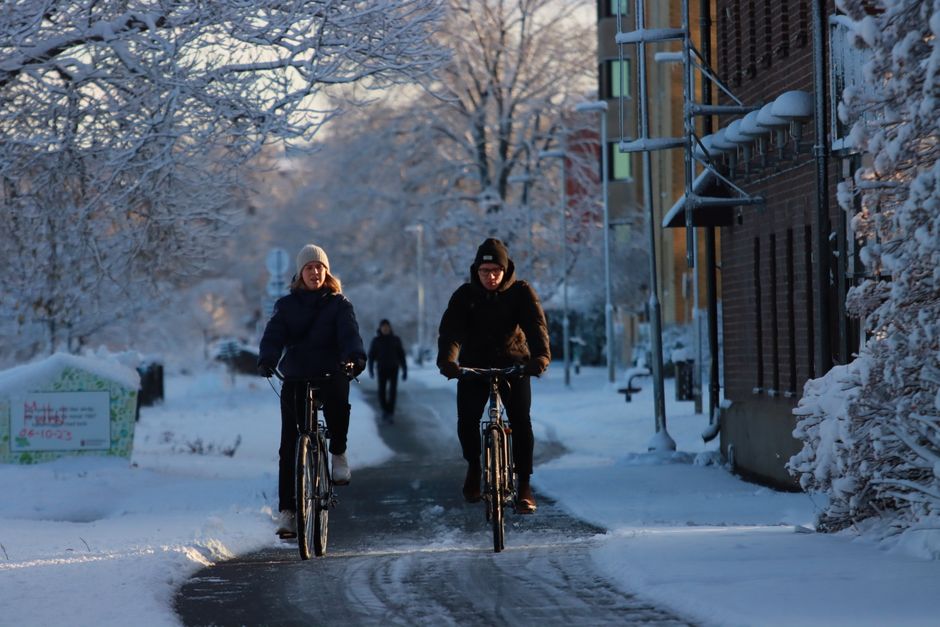
Cold hands ruin a ride faster than cold legs. The right winter cycling gloves keep blood moving, preserve brake and shift control, and stop rain from turning insulation into a wet sponge. The wrong pair does one of those jobs and fails at the other two.
Why do your hands get cold on a bike?
Wind removes heat faster than the thermometer suggests
Your hands sit in the cleanest airflow on the bike. At 35°F, a steady 15 mph ride creates a much harsher cooling effect than standing still in the same air. Fingers also have a high surface-area-to-volume ratio, so they lose heat quickly. The body responds by reducing blood flow to the hands and feet to protect the warmer core. That is why fingers can go numb even when your torso feels fine.
Insulation slows heat loss; it does not create heat. If your hands start cold, a thick glove may only trap cold air against your skin. Warm your hands before leaving, keep your core covered, and avoid gripping the handlebar harder than necessary. A tight grip reduces circulation and makes the problem worse.
Warmth and control fight for the same space
Thick insulation takes up room inside the glove. That extra material can make it harder to wrap your fingers around a brake lever, operate a small shifter, or open a zipper. Wet insulation creates a second problem: water conducts heat away from your skin far faster than dry air.
The category exists to balance three competing jobs: retain heat, block moving air and water, and let the fingers move precisely. No glove wins every job at every temperature. At 45°F, a slim windproof glove may be perfect. At 20°F, a lobster design or bar mitt usually beats a thicker five-finger glove because grouped fingers share warmth.
How much insulation do winter cycling gloves need?
The correct starting point is the temperature at your fingers during the ride, not the lowest number on the product label. Climbing, racing, and high-output riding create more body heat than a slow commute. Downhill riding, headwinds, and long traffic stops create less.
Use this temperature guide
| Ride conditions | Useful insulation range | Best glove shape | Main tradeoff |
|---|---|---|---|
| 40–50°F, active riding | Light fleece or 40–80g synthetic fill | Close-fitting five-finger glove | Good control, limited deep-cold protection |
| 30–40°F, mixed pace | 80–120g synthetic insulation | Full-finger glove with windproof back | Warm enough for stops, less precise than summer gloves |
| 20–30°F, steady riding | 120–170g insulation | Lobster or heavily insulated five-finger design | More warmth, slower shifting and braking |
| Below 20°F or long low-output rides | 150g or more, plus a shell or bar mitt | Lobster glove or pogie system | Maximum warmth, reduced access to controls |
| Cold rain or wet snow | Moderate insulation with waterproof membrane | Roomy glove or glove plus shell | Water protection can reduce breathability |
Fit matters more than another layer of fill
A winter glove should leave a small air space around the fingertips, but the palm must not slide when you brake. If the fingers touch the end of the glove under light pressure, buy a larger size. Compressed insulation loses loft and stops working.
Do not size up so far that the palm wrinkles under the brake lever. Those folds create pressure points and make your hand work harder. Measure your palm circumference, compare it with the brand chart, and test the fit while holding your actual handlebar. The best verdict is simple: choose the thinnest glove that keeps your fingers warm for the full ride.
Which winter glove designs earn the money?
The Pearl Izumi AmFIB Lobster Evo is the best cold-weather choice for riders who lose finger warmth first. It lists at about $105 and uses 170g PrimaLoft Gold with Cross Core insulation. The split index and middle fingers preserve brake and shift control while the ring and little fingers share heat. Pearl Izumi rates it for rides below 30°F. Buy it for cold road rides, commuting, and steady winter mileage. Skip it if you need summer-like finger separation.
Choose the design that matches the ride
- GOREWEAR C5 GORE-TEX Thermo Gloves: Around $75, with a GORE-TEX waterproof and windproof construction, thermo lining, reflective details, and a listed weight near 150g. This is the strongest pick for wet winter commuting when staying dry matters more than maximum warmth.
- 45NRTH Sturmfist 5: Listed at about $95 and built as a dedicated cold-weather cycling glove. It suits riders who want a traditional insulated glove for fat-bike, gravel, and winter commuting use without moving fully to a mitten.
- Castelli Perfetto RoS 2 Gloves: A lighter option around the $80 price range. Its wind protection and closer fit favor active road riding around the freezing mark, but it is not the choice for repeated heavy rain or very low temperatures.
Three buying tips matter more than brand loyalty. First, compare the cuff length with your jacket sleeve. Second, check the palm while holding your real handlebar. Third, keep a dry backup pair in a sealed bag on rides longer than an hour.
My clear product verdict
Choose the Pearl Izumi AmFIB Lobster Evo for sub-30°F warmth and the GOREWEAR C5 GORE-TEX Thermo for wet commuting. Choose the Castelli only when dexterity and a close road-riding fit matter more than deep-cold protection. The 45NRTH Sturmfist 5 is the sensible middle ground for riders who want a serious winter glove without a lobster layout.
Why do warm cycling gloves still fail?
Five mistakes cause most cold-hand complaints
- You buy for the lowest advertised temperature. Brands use different test methods, and riders produce different amounts of heat. Treat temperature ratings as starting points, not promises.
- You choose a tight fit for better control. A tight glove compresses insulation and restricts circulation. Leave a small air pocket at the fingertips while keeping the palm stable.
- You ignore the cuff. A short cuff leaves a gap between glove and jacket. Wind enters, rain runs down the sleeve, and the warmest glove becomes irrelevant.
- You wear one pair for every pace. A glove that works during a hard climb can fail during a long descent or traffic stop. Carry thin liners, a shell, or chemical hand warmers for changing effort levels.
- You dry gloves with direct heat. Radiators and hair dryers can damage waterproof membranes, adhesives, leather, and synthetic insulation. Press out water with a towel and let the gloves air-dry at room temperature.
Fix the system before replacing the glove
Start with your core. Add a vest or warmer jacket layer if your torso is cold. Your body will protect its center first and reduce blood flow to your fingers. Next, loosen your grip and check that your brake levers are not forcing your wrists into an awkward position.
Warmers can help, but place them on the back of the hand rather than directly against bare skin. They need air to activate and can create pressure inside a close glove. Never use a damaged warmer or sleep with one on your skin.
Do not buy thicker gloves to solve a soaked liner, poor circulation, or a leaking cuff. Find the actual failure first. A drier, slightly thinner glove often beats a bulky glove that traps sweat.
How should you buy, fit, and test winter cycling gloves?
What should I test before keeping them?
Put both gloves on indoors. Hold the handlebar, reach for the brake levers, shift through every gear, and open a jacket pocket. The fingertips should not pull against the seams. The palm should stay flat. If you cannot operate the controls inside for five minutes, the glove will not become more precise outside.
Test waterproofing under a running tap only if the manufacturer permits it; a home test cannot reproduce pressure from rain, gripping, and repeated flexing. Instead, wear the gloves during a short wet ride and inspect the liner immediately afterward. Damp fingertips after ten minutes usually mean the glove is too warm for your pace or not breathable enough.
Which pair should most riders buy?
For a rider who wants one pair for mixed winter commuting, the GOREWEAR C5 GORE-TEX Thermo is the better starting point because its waterproof membrane and moderate insulation cover more ordinary wet-weather rides. At around $75, it also costs less than the Pearl Izumi lobster glove.
For riders whose fingers go numb below freezing, buy the Pearl Izumi AmFIB Lobster Evo. Its 170g insulation and grouped fingers make the clearest warmth-first choice. If you ride below 20°F for long periods, add bar mitts instead of endlessly increasing glove thickness. Bar mitts protect the hands from wind while letting you wear a thinner glove that still operates the controls.
When should you not buy a winter glove?
Do not buy a highly insulated glove for short, hard rides in mild weather. Your hands will sweat, the liner will stay damp, and the glove may feel colder later. Do not buy a waterproof membrane when your normal rides stay dry and your priority is maximum handlebar feel. A close-fitting windproof glove is more comfortable in that case.
The final recommendation is specific: choose GOREWEAR C5 GORE-TEX Thermo for wet commuting, Pearl Izumi AmFIB Lobster Evo for sub-30°F warmth, and a lighter windproof glove for active rides above 40°F. Fit matters more than the biggest insulation number, and a dry, correctly sized glove beats an expensive glove that restricts your hands.
