
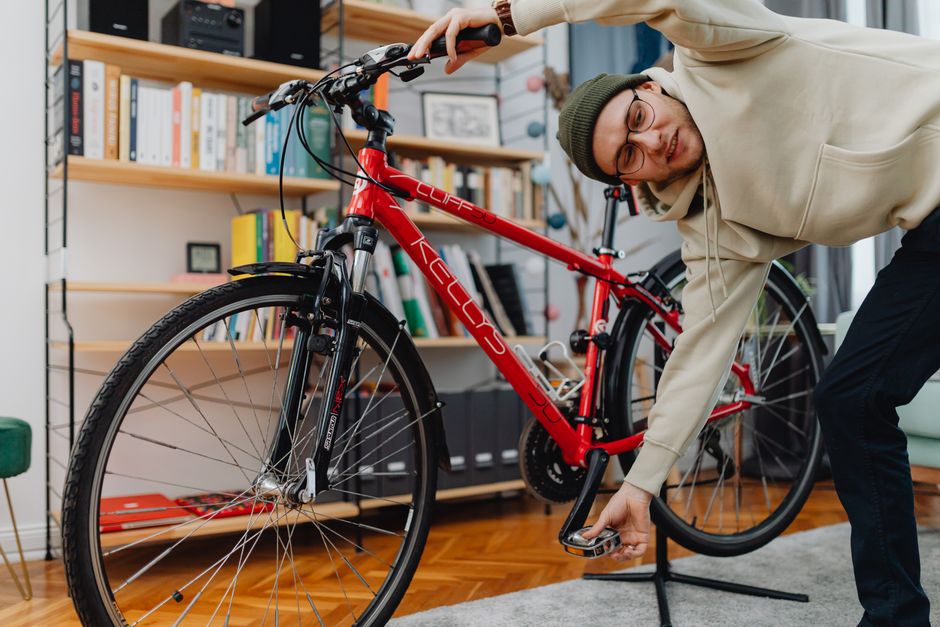
January is when a good indoor trainer earns its space. The right setup should stay quiet during a hard interval, keep the bike steady under a sprint, and disappear into a corner when the workout ends.
After years of moving trainers between spare rooms, garages, and upstairs apartments, I have learned that the trainer is only half the problem. The floor, mat, bike position, fan, and storage routine decide whether you keep riding after the first cold week.
Which trainer type stores best in a small room?
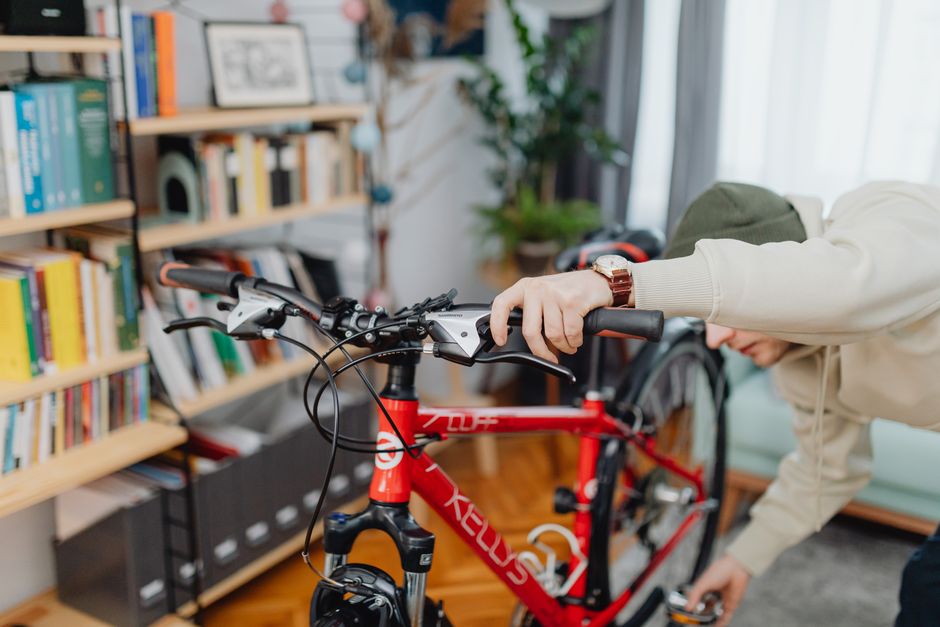
Storage changes the buying decision. A trainer that feels perfect on Saturday can become a nuisance when it blocks a cupboard, catches on a vacuum cleaner, or stays assembled because folding it feels like work. The table shows the practical tradeoff between performance, weight, and storage.
| Trainer | Useful specification | Storage verdict |
|---|---|---|
| Wahoo KICKR CORE 2 | 1,800 W maximum power, 16% simulated grade, about 13.6 kg | Best all-round choice if it can stay near the bike |
| Garmin Tacx NEO 2T Smart | Up to 2,200 W, 25% simulated grade, direct drive, about 21.5 kg | Quietest premium choice, but heavy to move |
| Elite Suito-T | 730 W at 20 km/h, 1,900 W at 40 km/h, 14.5 kg | Best compact fold for a cupboard or narrow closet |
| Wahoo KICKR SNAP | Wheel-on design, up to 1,500 W, roughly 12% simulated grade | Easy to store, but tire noise and wear are higher |
The clear storage winner is the Elite Suito-T. Its open footprint is about 560 by 560 by 495 millimeters, and its closed depth is listed at about 150 millimeters. The KICKR CORE 2 wins if you can leave it beside the bike, because its extra stability and lower tire noise make frequent workouts less annoying.
Why does indoor riding feel louder upstairs?
Does a thick mat make any trainer silent?
No. A mat can reduce vibration and protect the floor, but it cannot remove the sound made by a flywheel, belt, fan, chain, or cassette. It also cannot fix a loose axle, dry chain, or trainer foot that sits unevenly. Treat the mat as a vibration-control layer, not a magic soundproof box.
Why does the noise change when I shift gears?
Shifting changes cadence, flywheel speed, chain angle, and sometimes the trainer’s resistance. A higher gear can make the drivetrain louder even when the trainer itself is operating normally. I use a clean chain, avoid extreme cross-chaining, and keep cadence steady before judging the noise.
Can downstairs neighbors hear a direct-drive trainer?
They can, especially in a timber-framed building. Direct drive removes tire hiss, but low-frequency vibration can still pass through the floor. The best fix is a level trainer on a dense mat, placed away from a shared wall. If the room has a solid concrete floor, the same trainer usually sounds far less intrusive.
My verdict is simple: solve the floor contact first, then judge the machine. Most complaints blamed on the trainer come from poor placement, loose parts, or an overworked fan.
What actually makes a trainer feel stable?
Stability comes from three things working together: a wide base, even contact with the floor, and a bike that is clamped correctly. Power numbers matter for training, but they do not tell you how secure the bike will feel during a seated sprint. A rider producing 900 watts for ten seconds can create more side-to-side movement than a rider holding 250 watts for an hour.
Base width matters more than clever features
Wide feet spread the load and reduce tipping. Folding legs help storage, but they must lock firmly and open to the same position every time. Before riding, press down on each corner with your hand. If one foot lifts or the trainer rocks, stop and correct it. Do not expect the bike’s tires to hide an uneven base.
Axle fit controls the connection
Check whether your bike uses a quick-release skewer, a 12 by 142 millimeter thru-axle, or a 12 by 148 millimeter Boost axle. The correct adapter should seat fully against the frame. A partly engaged adapter can feel tight while still allowing movement. Tighten the trainer’s axle by hand until the frame is secure, then follow the manufacturer’s specified pressure rather than forcing it as hard as possible.
Rocker plates are not always an upgrade
A rocker plate can make long rides more comfortable by allowing small side-to-side movement. It can also make a compact setup taller, heavier, and harder to store. For a small January corner, I would first buy a proper mat, fan, and stable trainer. Add a rocker plate only if fixed positioning causes numbness or discomfort after several weeks of riding.
A stable trainer should feel boring under power. If you notice the equipment moving, the setup still needs work.
Six setup mistakes that ruin winter sessions

Most failed indoor setups do not fail because the rider lacks motivation. They fail because small problems make every ride unpleasant. These are the mistakes I would fix before buying more accessories.
- Skipping the fan: Indoor riding produces less cooling than outdoor riding, so heart rate rises quickly. Put airflow on your body from the first minute, not only when you feel overheated.
- Using a thin towel as a floor mat: towels slide, absorb sweat unevenly, and do not control vibration. Use rubber under the trainer and place the towel on the bike.
- Leaving the bike in the wrong gear: select a middle cassette gear before saving the setup. This reduces chain angle and makes the next ride quieter.
- Ignoring sweat corrosion: wipe the handlebar, stem, headset, and top tube after every session. Sweat can damage bearings and bolts long before the frame looks dirty.
- Storing the trainer with cables attached: cables catch on bags and furniture. Unplug the power supply, coil it loosely, and keep it in the same crate.
- Buying for maximum power instead of actual use: a 2,000-watt trainer is wasted money for a rider who trains below 300 watts and needs to carry the unit into a closet.
My clearest warning is about storage. If moving the trainer takes more than three minutes, it will eventually remain in the middle of the room. Measure the route from riding position to storage, including doors and stairs, before you buy.
When a wheel-on trainer is the better buy
Direct drive is the better choice for frequent structured training, but it is not automatically the right choice for every rider. If you ride indoors once a week, share a bike with another person, or need to store the trainer in a narrow cupboard, a wheel-on model can be the more sensible tool.
Choose the Wahoo KICKR SNAP for simple occasional training
The KICKR SNAP keeps the rear wheel on the bike and uses a resistance unit against the tire. It is easier to move than most direct-drive models and does not require removing the cassette. Its tradeoff is clear: more tire noise, more tire wear, and less convincing road feel. For a rider doing short winter workouts with a spare trainer tire, that tradeoff is acceptable.
Choose the Elite Qubo Fluid for low-tech reliability
The Elite Qubo Fluid is a better fit for riders who do not need app-controlled resistance. It has fewer electronics to pair and update, and it can be ready in seconds. It will not deliver the automatic gradient changes of a smart trainer, so it is the wrong choice for virtual racing or ERG workouts.
When not to buy a wheel-on trainer
Do not buy one for a shared upstairs room if noise is the main concern. The tire and roller create a sharper sound than a quiet direct-drive trainer, and a soft tire can make the bike feel less stable. For three or more indoor rides each week, the Wahoo KICKR CORE 2 is the better long-term choice. For maximum quiet and a premium road feel, the Garmin Tacx NEO 2T Smart wins, provided you can live with its weight.
Indoor trainers are moving toward quieter motors, smaller footprints, and easier storage. The useful measure is not the biggest power number on the box. It is how quickly the trainer becomes ready, how little it disturbs the room, and whether January rides still feel easy to start.
