
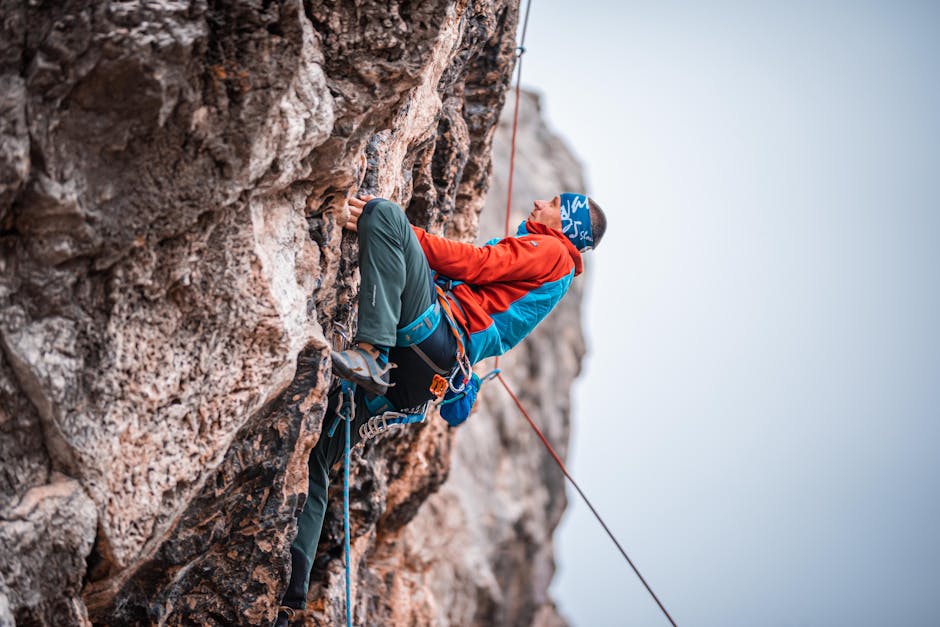
It was July 2021, and I was hanging off the third pitch of ‘Playin’ Hooky’ in Clear Creek Canyon. If you’ve been there, you know it’s not exactly the Eiger, but the sun was cooking the granite, and my partner—bless his heart—was having a total meltdown on a 5.10a crux that he’d lead a dozen times before. I was hanging there for forty-five minutes. Just dangling. My old, ultra-lightweight ‘performance’ harness was cheese-wiring my thighs. By the time I lowered him, I couldn’t feel my left foot. My toes were tingling in that scary, nerve-damage kind of way.
That was the day I decided that ‘lightweight’ is a marketing scam designed to sell gear to people who climb three days a year. I went home and bought the Climbing Technology Ascent. It’s not sexy. It’s not the harness you see the pros wearing in the magazines. But it saved my legs, and frankly, my sanity.
The part where I talk about the padding (because it actually matters)
Most reviews focus on the weight. The Ascent weighs about 430 grams for a size medium. That’s heavy compared to a Petzl Sitta or a Black Diamond Solution. But here is the thing: unless you are climbing at your absolute limit where ten grams makes the difference between sending and falling, weight is irrelevant. What matters is the 6mm of EVA foam they’ve shoved into the waist belt.
I measured it. It’s exactly 6mm. Most ‘pro’ harnesses give you maybe 3mm of high-density foam that feels like cardboard after six months. The Ascent feels like—well, it’s basically a couch for your crotch. I have spent hours in this thing now, hanging at belays on multi-pitch routes in Red Rock, and the circulation stays put. No tingling. No numbness.
The CT Ascent is built for people who actually spend time hanging in their harness, not just people who want to look cool at the gym.
The waist belt uses two buckles. This is—actually, let me put it differently—this is the most underrated feature in climbing gear. Most harnesses have one buckle. If you’re at the top or bottom of the size range, your gear loops end up shifted to one side. It’s annoying. You’re reaching for a cam and it’s behind your back. With the double buckles on the Ascent, you center the padding and the loops perfectly every time. It’s symmetrical. My brain needs that symmetry.
A brief tangent about gym climbers

I see people at my local gym wearing $160 ultra-thin alpine harnesses to top-rope a 5.8. Why? It’s like bringing a sniper rifle to a pillow fight. You’re paying double the price for half the comfort just so people know you spent a lot of money. It drives me crazy. Anyway, back to the harness.
I know people will disagree with me on this, but I actually hate the color blue on climbing gear. It feels lazy. Climbing Technology offers this harness in a grey and orange combo or a bright blue. I bought the grey one. The blue one looks like something you’d find in a discount bin at a hardware store. Their branding is honestly kind of terrible. It looks like a logo for a company that makes industrial forklifts. But maybe that’s why I trust it? It’s not trying to be a lifestyle brand. It’s just gear.
The gear loops and the ‘wrong’ opinion
The Ascent has four gear loops. They are big. They are stiff. Here is my ‘wrong’ opinion: I think gear loops should be slightly floppy. I know, I know. Everyone wants rigid plastic so the draws slide forward. But have you ever tried to squeeze through a tight chimney with rigid gear loops? They snag. They catch on the rock and jerk your hips around.
The Ascent loops are a middle ground. They have a plastic sheath, but they have some give. I’ve carried a double rack of C4s up to #3 on this thing and it didn’t sag. Here’s a quick breakdown of what I usually carry on it:
- 12-14 quickdraws (plenty of room)
- A full set of nuts on the front left
- Double rack of cams distributed across the front and back
- A dedicated loop for the chalk bag (which is actually centered, thank god)
- Two slots for ice tool clippers (which I never use because ice climbing is miserable)
I might be wrong about this, but I think they could have made the rear loops a bit larger. If you’re doing big wall stuff or really long trad link-ups, the back loops get crowded fast. But for 95% of us? It’s fine.
I used to think weight was everything
I was completely wrong. I used to obsess over every gram. I’d trim the straps on my backpack. I’d buy the thinnest ropes. I thought it made me a better climber. It didn’t. It just made me more uncomfortable. The CT Ascent taught me that comfort is actually a performance metric. If I’m not thinking about how much my harness hurts, I can think about the next move.
I’ve used this harness for two full seasons now. Probably 150 days of climbing. The tie-in points show almost zero wear. On my old Black Diamond harness, the lower tie-in point started fuzzing out after six months. I refuse to buy BD harnesses anymore because of that. I don’t care if they’ve ‘fixed’ the manufacturing—I lost my trust in their durability. CT uses a 16mm webbing that feels like it could tow a truck. It’s beefy.
One weird thing: the leg loops are huge. I have fairly athletic legs (years of hiking, I guess) and I still have the buckles almost all the way tight. If you have skinny ‘climber legs,’ you might find the leg loops a bit baggy even when cinched down. It doesn’t affect safety, but it feels a bit sloppy. Check the sizing twice.
The verdict
Is it the prettiest harness? No. Is it the lightest? Definitely not. But it’s the only one I’ve owned that doesn’t make me want to scream after thirty minutes of hanging at a belay. It’s a workhorse. It’s the gear equivalent of a 1990s Toyota Hilux. It’s not going to win any beauty contests, but it will never let you down.
Buy the damn thing.
Honestly, I sometimes wonder if I only like this harness because it’s the underdog. Everyone at the crag has the same three Petzl models. There’s something satisfying about pulling out a piece of gear that works better than theirs for forty dollars less. Or maybe I’m just becoming a grumpy old climber who cares more about his lower back than his send-weight. Who knows?
Does the gear we choose actually define us, or are we just over-analyzing nylon and foam to avoid thinking about why we’re still scared of falling on a bolt?
