
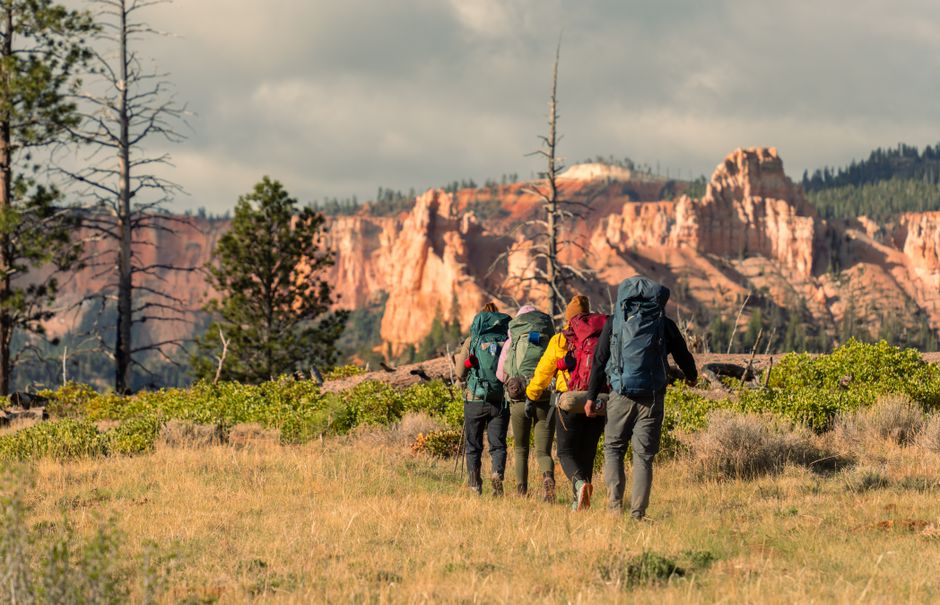
Seventy percent of hikers on the Pacific Crest Trail carry a pack between 38 and 45 liters. That’s not a coincidence. It’s the result of thousands of miles of trial and error by people who learned the hard way that bigger packs invite heavier loads. The average thru-hiker carries around 12 pounds of base weight. The average weekend warrior carries 25. The difference isn’t gear quality. It’s pack size and discipline.
This guide breaks down exactly what a 40-liter trekking backpack can hold, how to fit it to your body, and where most people go wrong. No fluff. No “this is the one” nonsense. Just the numbers and tradeoffs that actually matter.
Why 40 Liters Works for 90% of Multi-Day Treks
A 40-liter pack forces you to make smart choices. You can’t bring a second pair of boots or a camp chair. You have to pick gear that does double duty. That’s not a limitation. It’s a feature.
Here’s what fits in a properly packed 40-liter pack for a 3-5 day trip:
- Sleeping bag (compressed to ~8 liters)
- Sleeping pad (strapped outside or in a side pocket)
- Tent or tarp (1-person ultralight, ~3 liters)
- Stove, fuel canister, pot, spoon (~2 liters)
- Food for 5 days (~8 liters)
- Water for 1 liter carried, filter for refills
- Puffy jacket, rain shell, spare baselayer (~4 liters)
- First aid, headlamp, map, toiletries (~2 liters)
- Phone, power bank, cables
That’s roughly 32 liters of internal volume, leaving 8 liters for overflow or an extra day of food. If your sleeping bag is bulky or your tent weighs over 4 pounds, you’ll need 50+ liters. But modern ultralight gear compresses small. A Sea to Summit Spark SpI sleeping bag (rated to 25°F) packs down to the size of a football. A Big Agnes Copper Spur HV UL2 tent fits in a 4-liter stuff sack.
The tradeoff: you can’t carry a 4-person tent or a 10-pound sleeping bag. If your gear is old or heavy, 40 liters won’t work. But if you’re willing to upgrade one or two pieces, 40 liters saves you 2-3 pounds of pack weight compared to a 60-liter bag.
When 40 Liters Is Too Small
Winter trips need more insulation and a bigger sleeping bag. Group trips where you carry shared gear (tent, stove, food for two) push you past 40 liters. If you’re carrying a bear canister, add 3 liters. For those cases, look at 50-55 liter packs like the Osprey Atmos AG 50 or Gregory Baltoro 55. But for solo 3-season treks, 40 liters is the sweet spot.
The Three Measurements That Matter (Not Torso Length Alone)
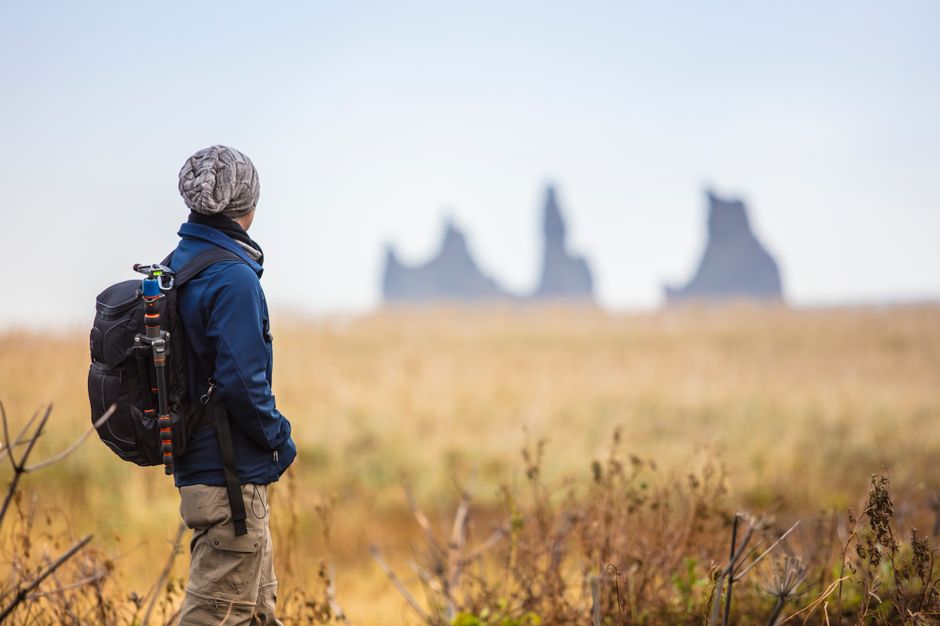
Every guide says “measure your torso length.” That’s step one. But three other measurements determine whether a pack actually carries well.
Hip belt angle. Most packs have a fixed hip belt angle. If your iliac crest (the top of your hip bone) slopes downward toward your front, a flat belt will dig in. The Deuter Aircontact Lite 45+10 has a pivoting hip belt that adjusts to your hip shape. The Arc’teryx Bora 45 uses a rigid frame that transfers load straight down, which works best for straight-up-and-down torsos.
Load lifter strap placement. Load lifters pull the top of the pack toward your shoulders. If they attach too low on the pack (below your shoulder blades), they can’t do their job. Look for load lifters that attach at or above your shoulder level when the pack is on. On the Osprey Exos 48, the load lifters attach at the right height for most people. On cheaper packs, they’re often placed too low.
Frame length vs. torso length. A pack frame that’s too long for your torso will hit the back of your head when you look up. Too short, and the hip belt won’t sit on your hip bones. The REI Co-op Flash 45 has an adjustable frame that slides up and down to fit torsos from 16 to 21 inches. That’s rare at this price point ($179).
Here’s the quick comparison:
| Pack Model | Volume | Weight | Frame Type | Best For |
|---|---|---|---|---|
| Osprey Exos 48 | 48L | 2 lb 9 oz | Internal frame, mesh back | Ultralight hikers, hot weather |
| Gregory Stout 45 | 45L | 3 lb 4 oz | Internal frame, foam back | Comfort-focused, wider hips |
| Deuter Aircontact Lite 45+10 | 45+10L | 3 lb 8 oz | Internal frame, ventilated back | Warm climates, heavy loads |
| Arc’teryx Bora 45 | 45L | 3 lb 12 oz | Rigid frame, laminate back | Rugged terrain, long durability |
| REI Co-op Flash 45 | 45L | 2 lb 10 oz | Adjustable internal frame | Budget-conscious, variable fit |
The Biggest Mistake: Buying a Pack Before Your Sleeping Bag
Here’s the sequence that causes 80% of pack fit problems: people buy a pack first, then try to cram their gear into it. The pack is too small, so they strap things on the outside. The load shifts. Their shoulders hurt. They blame the pack.
Reverse the order. Buy your sleeping bag and tent first. Compress them. Measure their packed volume. Then buy a pack that fits them with room for food and water. A Nemo Disco 30 sleeping bag compresses to 9 liters. A MSR Hubba Hubba NX tent packs to 5 liters. That’s 14 liters for shelter and sleep. Add 8 liters for food, 2 for cooking, 4 for clothes, 2 for misc. That’s 30 liters. A 40-liter pack gives you 10 liters of margin.
If your sleeping bag compresses to 15 liters and your tent to 8, you’re at 23 liters before food. Add 8 liters of food and you’re at 31. Still fine. But if your tent is a 4-person car camping model that packs to 20 liters, no 40-liter pack will work. You need a 60-liter pack or a new tent.
Most people don’t measure. They guess. Then they end up with a pack that’s either too big (and they fill it with junk) or too small (and they strap everything to the outside, ruining balance).
The External Strap Trap
External straps are for a sleeping pad and maybe a wet tent. That’s it. If you’re strapping your sleeping bag, your tent, your food bag, and a water bottle to the outside, your pack is too small. Every external strap-on item adds wind resistance and shifts your center of gravity backward. You’ll feel it after mile 8.
How to Test a Pack Without Buying It First
You can’t trust a store fitting where you stand still for 30 seconds. You need to simulate real conditions.
Go to a store like REI or a local outfitter. Ask them to load the pack with 20 pounds of weight (they have sandbags or foam blocks for this). Wear it for at least 10 minutes. Walk around. Bend over to tie your shoes. Look up at the ceiling. Sit down on the floor. If the hip belt shifts or the frame hits your head, it’s the wrong pack.
Three specific tests:
- The hip belt test. The hip belt should wrap around your iliac crest with the padding centered on your hip bones, not above them. The buckle should sit at your belly button or slightly below. If the belt rides up when you squat, it’s too loose or the wrong angle.
- The shoulder strap test. With the hip belt properly tightened, the shoulder straps should barely touch your shoulders. They’re not meant to carry weight. They stabilize the pack. If you feel pressure on your shoulders, the load isn’t transferring to your hips.
- The load lifter test. After adjusting the hip belt and shoulder straps, tighten the load lifters (the small straps that angle from the top of the shoulder straps to the pack). The pack should pull into your back, not lean away. If the load lifters are at max tension and the pack still leans back, the frame is too short or the pack is overloaded.
If you can’t visit a store, order from a place with free returns. REI, Backcountry, and Moosejaw all have generous return policies. Order two sizes. Keep the one that fits. Return the other.
Frameless vs. Framed: The Real Tradeoff
Frameless packs like the Zpacks Arc Blast 55 (16 oz) or Hyperlite Mountain Gear 3400 Southwest (24 oz) save serious weight. But they only work if your total pack weight is under 20 pounds. At 25 pounds, a frameless pack will dig into your lower back and make your shoulders ache within hours.
Framed packs add 1-2 pounds but transfer weight to your hips efficiently. A Gregory Baltoro 45 (4 lb 2 oz) carries 40 pounds comfortably. A Deuter Futura 40 (3 lb 5 oz) handles 30 pounds well. If you’re carrying a bear canister or 5 days of food, framed is the right choice.
Here’s the rule: if your base weight (everything except food and water) is under 10 pounds, frameless works. If it’s over 12 pounds, get a framed pack. Most weekend hikers have a base weight of 12-15 pounds. That puts them in the framed category.
The Osprey Levity 45 (1 lb 14 oz) is a hybrid — it has a minimal frame that adds structure without full weight. It carries 25 pounds okay, 30 pounds poorly. It’s a good middle ground if you’re trying to cut weight but aren’t ready for frameless.
What About Women’s-Specific Packs?
Women’s packs have shorter torso lengths (usually 14-17 inches), narrower shoulder straps, and hip belts that flare out for wider hips. The Osprey Aura AG 50 and Gregory Deva 50 are popular for a reason. If you’re a woman, a men’s pack might work if you have a long torso and narrow hips, but most women find women’s-specific packs more comfortable. Try both.
Compressed Verdict: Which Pack for Which Trip
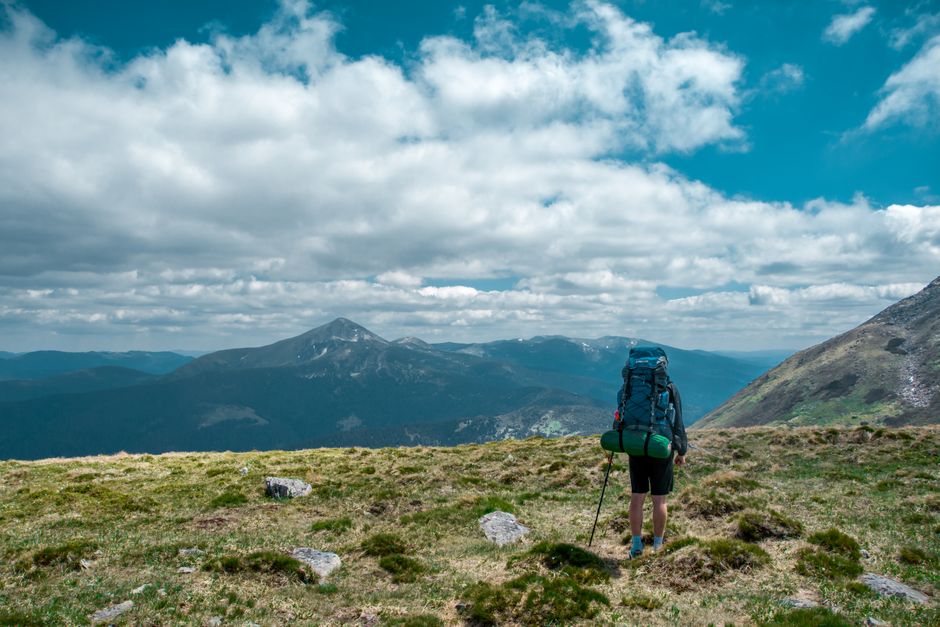
- 3-season solo, 3-5 days, base weight under 12 lbs: Osprey Exos 48 or REI Co-op Flash 45. Light, ventilated, carries 25 lbs well.
- 3-season solo or duo, 5-7 days, base weight 12-15 lbs: Gregory Stout 45 or Deuter Aircontact Lite 45+10. More padding, better load transfer for heavier carries.
- Winter or bear canister trips: Osprey Atmos AG 50 or Gregory Baltoro 55. Overbuilt but comfortable at 40+ lbs.
- Ultralight, base weight under 10 lbs: Hyperlite Mountain Gear 3400 Southwest or Zpacks Arc Blast 55. Frameless, expensive, requires discipline.
If you want one pack that does everything reasonably well, the Osprey Exos 48 is the most versatile choice under 3 pounds. It’s not the most durable (the mesh back can tear), and it won’t carry 40 pounds comfortably. But for 90% of treks, it’s the right tool. If you’re carrying heavier loads or want bombproof construction, the Gregory Stout 45 is a better bet for $10 less.
Forty liters. Fitted to your body. Packed with intention. That’s the formula. Everything else is marketing.
