

Most players assume copying a pro’s setup is the path to playing better. It isn’t. Roger Federer’s Wilson Pro Staff RF97 weighs 340g unstrung, has a 97 sq in head, and uses an 18×20 string pattern. Playing with that racket as a recreational or intermediate player will actively slow down your development — and may stress your elbow within weeks.
Racket specs aren’t marketing numbers. They’re physics. Head size determines the sweet spot. Weight determines how much mass you can put behind the ball. Balance determines where you feel that mass. String pattern determines how the strings interact with the ball at contact. Get these four things wrong and you’re compensating with your technique instead of playing freely.
Head Size: The Spec That Changes Every Shot
Head size is measured in square inches, running from roughly 85 sq in (tiny, tour-level control frames) to 135 sq in (oversized beginner frames). The majority of competitive rackets sold today sit between 95 and 105 sq in.
A larger head gives you a bigger sweet spot. Mishits that would die in the net with a 93 sq in frame will stay in play with a 105 sq in frame. That sounds purely positive — it isn’t. Larger heads reduce string movement at contact (hurting spin potential), make precise placement harder, and usually come paired with lighter, more hollow frames that lack the solid feedback experienced players rely on.
| Head Size Category | Range (sq in) | Best Suited For | Real Example |
|---|---|---|---|
| Midsize | 85–94 | Advanced players, tour-level precision | Wilson Pro Staff RF97 (97 sq in) |
| Mid-plus | 95–104 | Intermediate to advanced, best balance of control and forgiveness | Wilson Blade 98, Babolat Pure Drive (100 sq in), Head Speed MP |
| Oversize | 105–115 | Beginners, arm-sensitive players, seniors | Head Speed PWR (115 sq in), Wilson Clash 108 |
| Super Oversize | 116–135 | Complete beginners, very slow swing speeds | Head Ti.S6 extended frames |
Why 100 sq in became the industry default
The 100 sq in head size hit a sweet spot in the late 2000s. Big enough to forgive off-center hits for recreational players, small enough for competitive players to control direction. The Babolat Pure Drive at 100 sq in has been one of the top-selling rackets globally for over a decade for this exact reason. It isn’t perfect for everyone — but it’s wrong for fewer people than almost any other spec on the market.
When going smaller actually makes sense
If you play at least three times per week, hit with consistent technique on both wings, and feel your current racket sends the ball long more than into the net — dropping to 98 sq in is the right call. The Wilson Blade 98 or Yonex EZONE 98 (305g, 98 sq in, 16×19 string pattern) give meaningfully more placement precision without going full pro-level demanding. They reward clean technique rather than requiring it.
Racket Weight: The Most Consequential Number on the Spec Sheet
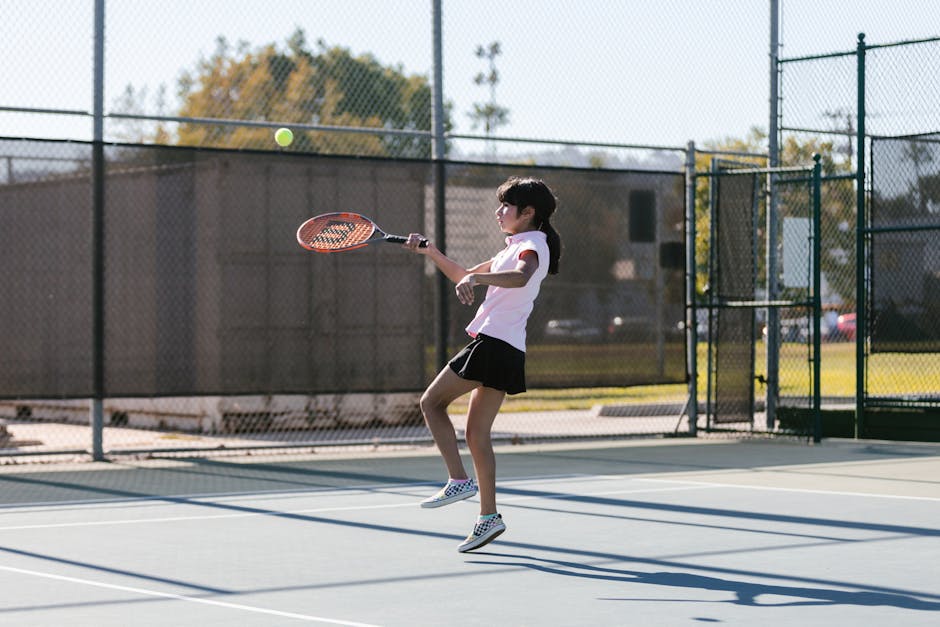
This is where most buying mistakes happen. Players assume heavier equals more powerful equals more serious. The relationship is real but conditional.
Heavier rackets carry more mass through the contact zone — meaning deeper, more penetrating groundstrokes when you swing at full speed. The key phrase is when you swing at full speed. If the racket is too heavy for your current strength and fitness level, your swing speed drops, your timing breaks down, and a lighter racket will actually produce more effective power. Ball departure speed depends on both racket mass and racket head speed at impact. Neither alone is enough.
Beyond performance, weight is directly linked to injury risk. A racket too light generates excessive vibration through the frame — that vibration transfers to the elbow and forearm. A racket too heavy strains the shoulder and wrist across hundreds of strokes per session. Neither extreme protects the arm.
Weight ranges that actually matter
Rackets are sold unstrung. Add strings (typically 14–17g) and a synthetic overgrip (5–7g) to get real in-hand weight:
- Under 285g unstrung: Beginner and junior frames. Light enough for any player but lack mass at contact. Vibration can become a real problem with poor technique. Examples include the Head Ti.S6 series.
- 285–299g unstrung: Tweener rackets. Good for club players prioritizing easy power. The Wilson Clash 100 at 295g sits here — specifically engineered with arm comfort in mind at this weight range.
- 300–315g unstrung: The competitive performance range. Babolat Pure Drive (300g), Head Speed MP (300g), and Babolat Pure Aero (300g) all land here. Enough mass for a penetrating ball, manageable for most fit adults playing regularly.
- 315g+ unstrung: Advanced player’s frames. Wilson Blade 98 (304g), Yonex EZONE 98 (305g), Wilson Pro Staff RF97 (340g). These demand consistent, technically sound mechanics. The extra mass rewards you with stability and plow-through — poor technique produces arm stress instead.
Swing weight vs static weight
Static weight (what the scale reads) and swing weight (how the racket feels when you swing it) are not the same number. A head-heavy racket at 290g can feel harder to swing than a head-light racket at 310g. Swing weight is measured in kg·cm² — the typical tour range is 320–350. Most retailers don’t publish this prominently. When reading player reviews online, look for comments about plow-through or stability at contact — that’s swing weight described in plain terms.
Balance Point: Why Two Identical-Weight Rackets Feel Nothing Alike
Balance is measured in millimeters from the butt cap to the balance point. A standard 27-inch (686mm) racket sits at its midpoint at 343mm. Head-heavy frames balance above that number. Head-light frames below it.
What changes at contact based on balance
A head-heavy frame generates more plow-through on groundstrokes — the weight behind the hitting zone carries the racket through the ball. This suits baseliners who take long, looping swings. It’s a liability at the net, where quick wrist and arm adjustments matter more than momentum.
A head-light frame swings faster, gives better feedback on touch shots, and lets you react quicker on volleys and returns of serve. Most heavy player’s frames are designed head-light for this specific reason. The Wilson Blade 98 balances around 315mm — noticeably head-light. The static weight provides the mass; the head-light balance makes it maneuverable.
Adjusting balance without buying a new racket
Lead tape at the head shifts the balance toward head-heavy. Lead tape at the handle does the reverse. Replacing a synthetic grip with a leather grip adds 10–15g at the handle, making the frame slightly more head-light and increasing total swing weight. It costs $15–20 and is fully reversible. Many players fine-tune this way rather than buying a new frame when the balance feels slightly off.
String Pattern: What 16×19 and 18×20 Actually Produce
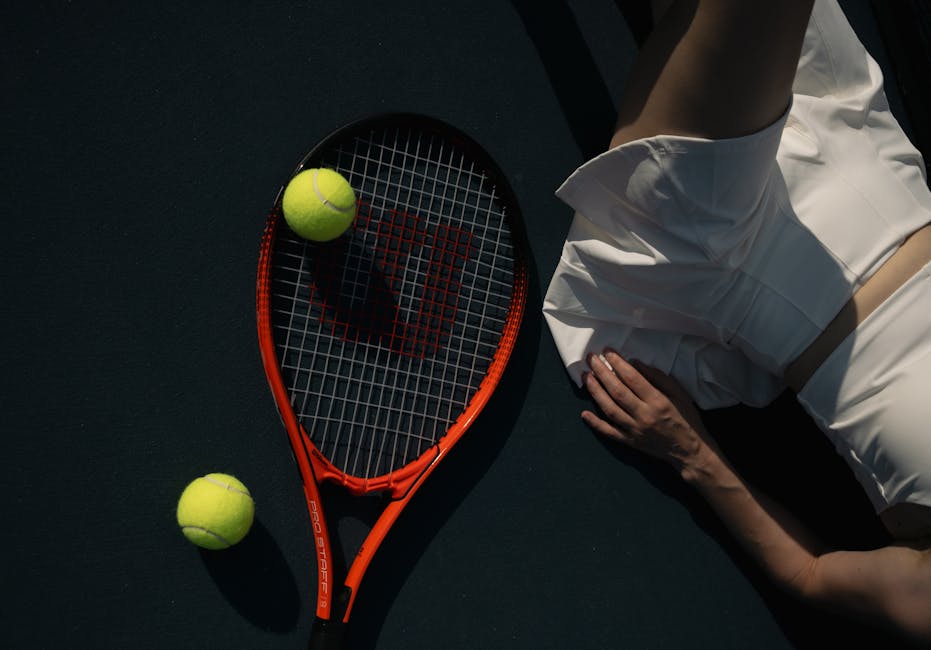
The string pattern tells you how many main strings (vertical) and cross strings (horizontal) the frame contains. More strings packed into the same head size means a denser pattern — less string movement, less spin, more control, longer string life.
The two dominant patterns are 16×19 (open) and 18×20 (dense). Here’s what each delivers with real racket examples:
- Babolat Pure Aero (16×19): An open pattern combined with a stiff RA 71 frame, built specifically to maximize topspin. Strings move aggressively at contact and snap back. Nadal built his entire baseline game around this combination.
- Wilson Blade 98 (18×20): Dense pattern, less string movement, a flatter and more precise ball. Better for players who drive through the ball with a compact, flat swing. String breakage also happens slower — good for heavy hitters who snap strings regularly.
- Head Speed MP (16×19): Open pattern in a medium-stiff frame. Djokovic’s signature line is built around spin and control together, though his personal sticks differ heavily from the retail version in weight and balance.
Simple rule: Topspin players go 16×19. Flat hitters and precision baseliners go 18×20. This difference is not subtle — you’ll feel it within the first 30 minutes of hitting.
Frame Stiffness: What the RA Number Tells You
Stiffer frames return more energy to the ball. Flexible frames absorb it. That’s the whole story — and the marketing teams for “power rackets” have been leaning on the first half of it for years.
Stiffness is measured on the RA scale, ranging from about RA 55 (very flexible) to RA 75 (very stiff). The Wilson Clash 100 was engineered at RA 55 — the most flexible mainstream performance frame — specifically as an arm-friendly alternative to stiff power frames. The Prince Phantom 100P sits around RA 58. Both dampen vibration dramatically compared to the Babolat Pure Drive (RA 71), which is an excellent racket that punishes poor technique through the elbow joint.
Buy a stiff frame only if your strokes are consistent and you have no existing arm trouble. For anyone returning to tennis after a break, or managing tennis elbow, start at RA 60 or below. The power gain from a stiffer frame is not worth the injury risk if your mechanics aren’t already dialed in.
Matching Racket Specs to Your Actual Playing Level

Real frames, real numbers, organized by player type:
| Player Profile | Head Size | Weight (unstrung) | Frame Stiffness (RA) | Recommended Frame |
|---|---|---|---|---|
| Complete beginner | 105–115 sq in | 260–285g | Any | Head Ti.S6, Wilson Hyper Hammer 5.3 |
| Casual club player (1–2x/week) | 100–105 sq in | 285–300g | 55–65 | Wilson Clash 100, Babolat Pure Drive Lite |
| Intermediate (consistent strokes, 2–3x/week) | 98–100 sq in | 295–310g | 60–70 | Head Speed MP, Babolat Pure Drive, Babolat Pure Aero |
| Advanced competitive (3–5x/week) | 95–100 sq in | 305–320g | 60–68 | Wilson Blade 98, Yonex EZONE 98, Head Prestige MP |
| Arm-sensitive or returning from injury | 100 sq in | 285–305g | 55–62 | Wilson Clash 100, Prince Phantom 100P |
The most common misstep: intermediate players selecting advanced specs because they feel more serious. A player hitting three times per week without formally trained mechanics will see better results from the Head Speed MP than from the Wilson Blade 98 — despite the Blade being the technically superior frame. The right specs for your current game outperform better specs for a game you don’t yet have.
Three Buying Mistakes That Cost Players Months of Progress
First: buying because a pro endorses the frame. Tour players compete with rackets painted to look retail but built to custom specs — different weight, different balance, modified string beds, custom lead tape distributions. The frame you buy shares the cosmetics. The construction is different.
Second: ignoring string tension. The same racket strung at 45 lbs versus 60 lbs behaves like a different tool. Lower tension creates more power and spin. Higher tension gives more control and precision. Before replacing a racket that feels wrong, try a restring at a different tension first. It costs $30–50 and may solve the problem entirely without spending $200 on a new frame.
Third: treating grip size as the primary decision driver. Grip size runs from L1 to L5 (4 inches to 4 5/8 inches in circumference) and affects comfort — not swing mechanics or ball behavior. You can always add an overgrip to go up half a size. Don’t let grip availability dictate your head size and weight choices. Those specs have far more impact on how you actually play.
Quick reference — spec choices by playing goal:
- More power without more swing effort: 100–105 sq in head, 285–295g unstrung, head-heavy balance, RA 65+
- More topspin: 100 sq in, 16×19 string pattern, RA 65+, Babolat Pure Aero
- More control and shot placement: 98 sq in, 18×20 string pattern, 305–315g, Wilson Blade 98
- Arm protection as the priority: RA 55–62, 100 sq in, 295–305g, Wilson Clash 100 or Prince Phantom 100P
- Best all-around intermediate frame: Head Speed MP — 300g, 100 sq in, RA 65, 16×19 — the most forgiving competitive frame currently available
