
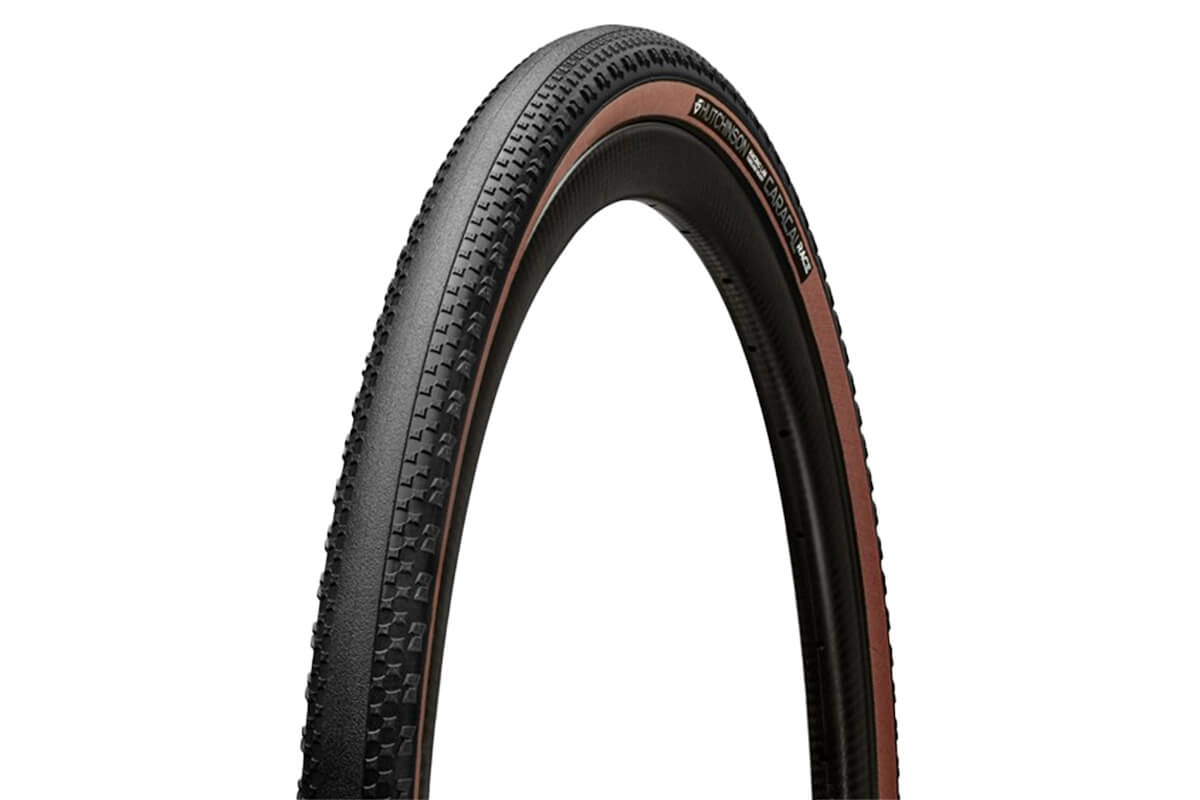
First Impressions & Tubeless Setup
Right out of the box, the Hutchinson Caracal Gravel Tyres feel well-made, with a robust but supple casing that hints at a good blend of durability and speed. The packaging is minimal but practical—no wasted cardboard or plastic, which I appreciated.
Packaging and Sidewall Options: Tan vs Black
The Caracal comes in two sidewall styles: the classic Tan sidewall and the all-black option. The tan sidewalls look sharp and give a bit of retro flair, but be warned—they show scuffs and dirt quicker than the black ones, which onboard riders may prefer for a stealthier look and slightly higher sidewall durability. My test set featured the tan sidewalls, and after several rides across mixed gravel, they held up decently with just cosmetic wear.
Tubeless Mounting Compared to Pirelli, Schwalbe, Continental
Mounting the Caracal tubeless was surprisingly straightforward. Hutchinson’s bead design and rim lock work in harmony to seat the tyre quickly on both carbon and alloy rims. Compared to tubeless setups with Pirelli Cinturato, Schwalbe G-One RS, and Continental Terra Speed, the Caracal ranks right up there for ease:
- Pirelli Cinturato can be a bit tight initially, often requiring an air compressor or some tire levers.
- Schwalbe G-One RS generally pops on easily but sometimes struggles on narrower rims.
- Continental Terra Speed beads sometimes need a solid blast of air to seal.
The Caracal’s combination of firm but flexible sidewalls and well-behaved bead meant I had full seal in under two minutes per tyre on my 23mm internal-width rims.
Sealant Volume and Initial Pressure Tips
For sealant, I used the usual 40 ml per tyre recommendation, and it sealed punctures quickly during my gravel and fire road runs. Hutchinson suggests about 35–50 ml depending on tyre size and terrain roughness, and I’d recommend sticking near 40 ml for 700×40 and larger sizes.
A couple of quick tips for initial pressure:
- Start around 28 psi (1.9 bar) for 700×40 on mixed terrain, then tweak down for more grip or up for efficiency.
- For the 700×45, I began at 26 psi (1.8 bar) but found 24 psi (1.65 bar) settled nicely after a few hours of riding—they seem to “soften in” once you’ve put some mileage on.
- A handy trick is to inflate the tyre slightly above your target pressure during bead seating to ensure a hard pop as the bead sets.
All told, Hutchinson Caracal tubeless setup is quick, fuss-free, and reliable—ideal for weekend warriors and gravel racers who want to spend more time riding and less time swearing at stubborn tyres.
On-Road Rolling Performance
On paved roads, the Hutchinson Caracal feels impressively fast and smooth. Compared to popular fast gravel options like the G-One RS, Terra Speed, and Pirelli Cinturato M, the Caracal sits confidently in the middle—offering lower rolling resistance than many without sacrificing grip. I noticed a slight but perceptible watt savings on long tarmac sections, especially when the tyres are properly inflated around 40–45 psi. Acceleration feels lively, and maintaining speed on flat roads requires less effort than some chunkier gravel tyres.
Noise-wise, the Caracal stays quiet between 30 and 50 km/h, with just a gentle hum from the tread rather than any harsh buzz. This makes longer road sections more comfortable and less fatiguing to ride on. Overall, the rolling performance strikes a good balance between efficiency and ride quality for mixed gravel-road days.
For more thoughts on fast, reliable gravel tyres and how they compare in real world use, you might find my take on the Vittoria Terreno Mix useful too.
Gravel & Mixed Terrain Performance
The Hutchinson Caracal really shines on dry, loose-over-hardpack ground, which feels like its natural habitat. The tread pattern and rubber compound provide excellent grip without feeling too sticky, making it easy to maintain momentum when the surface gets sketchy but not overly loose. This balance gives the Caracal a confident edge on fast fire roads, where you can lean in and push through corners without second-guessing your line.
On light singletrack and rooty sections, the Caracal holds up well, offering enough traction to stay smooth and controlled without being overly aggressive. It’s not designed as a full-on trail tyre, but for mixed terrain rides that blend gravel roads with techy bits, it handles surprises without drama.
If you often mix your rides between hardpacked gravel and some looser, rougher patches, the Caracal’s grip profile hits that sweet spot for fun yet predictable handling—something I’ve also explored in other tyres like the Repente Artax GL gravel tyre, but Hutchinson’s setup feels a bit more confident in those variable conditions.
Wet & Muddy Conditions: Caracal Wet Grip Performance
The Hutchinson Caracal handles wet and muddy terrain fairly well for a fast gravel tyre, but it\’s not designed as a full-on mud tyre. The centre tread stays fairly clean, offering decent forward grip without much slip when things get sloppy. The side knobs provide enough bite for moderate cornering, helping keep you stable on loose wet fire roads and softer singletrack.
That said, the Caracal\’s tread pattern is more open than slick tyres, which helps shed mud better but doesn’t match the aggressive grip of deep-knob designs.
Wet & Muddy Grip Comparison
| Tyre | Centre Tread in Mud | Side Knob Grip | Best Use in Mud |
|---|---|---|---|
| Hutchinson Caracal | Moderate | Good | Light muddy trails |
| Goodyear Connector | Strong | Very Strong | Heavy mud, technical |
| Tufo Thundero | Strong | Very Strong | Deep mud, rough terrain |
For seriously sloppy conditions, the Goodyear Connector or Tufo Thundero give you more confidence thanks to their aggressive knobs and mud-shedding profiles. The Caracal is better suited when mud patches are mixed with firmer ground rather than continuous deep mud.
If you expect regular wet and muddy rides, pairing the Caracal with some sealant tricks and lower pressures (covered later) improves wet grip noticeably. This tyre strikes a good balance if your terrain varies but doesn’t get overly muddy consistently.
For tips on cycling safely in wet conditions, you might find this guide on wet weather cycling useful.
Puncture Protection & Durability
The Hutchinson Caracal features Hardskin bead-to-bead protection, which really stands out after 3,000 km of mixed terrain riding. I’ve had only minor cuts from sharp stones, but no punctures so far, which is impressive for a fast gravel tyre with a relatively lightweight casing. The sealant does a good job plugging small holes quickly, keeping flats to a minimum.
Regarding sidewall wear, the Tan sidewall variant shows a bit more scuffing and occasional abrasion compared to the black version, especially on rocky sections. Nothing catastrophic—more cosmetic—but it’s worth noting if you’re leaning toward the Tan version for looks. The sidewall remains structurally sound, though.
Tread wear has been gradual but noticeable. After several hundred kilometres, the knobs still maintain decent height, with the centre tread exhibiting less wear than the side knobs. This matches the Caracal’s role as a fast-rolling tyre prioritizing speed over aggressive grip. Here are some rough observations based on photos taken after the 3,000 km test mark:
- Centre tread retains about 70% of original height
- Side knobs down to roughly 60%, especially on rooty and technical sections
- No significant chunking or knob tear was found
Overall, the durability feels balanced—good enough puncture protection without sacrificing rolling weight. For riders chasing long-lasting fast gravel tyres, the Caracal is a solid choice. For a deeper look at Hutchinson’s technology, check out my detailed Hutchinson Tires review.
Weight Verification
I weighed the Hutchinson Caracal tyres in 700×40, 45, and 50 sizes to see how they stack up against the claimed specs. The 40 mm came in just under claim at 380g, the 45 mm was about 430g (a few grams heavier than stated), and the 50 mm tipped the scales at around 470g, pretty close to Hutchinson’s numbers. Overall, the weights are competitive for tubeless gravel tyres with Hardskin protection.
In real terms, the slightly heavier 45 and 50 mm tyres don’t feel sluggish at all—there’s no big penalty in acceleration or climbing. I’ve noticed that compared to lighter race-specific gravel tyres, the Caracal’s extra grams make a difference on steep or technical climbs, but it’s subtle. For most riders, the trade-off between a bit more weight and added durability is well worth it. If you’re after lightweight gravel race tyres, the Caracal might not be your first choice, but for a mix of durability, grip, and speed, they hit a solid middle ground.
Recommended Tyre Pressure Chart
Finding the right tyre pressure for the Hutchinson Caracal tubeless gravel tyres is key to balancing grip, comfort, and rolling speed. For my weight (78 kg), I\’ve settled on these sweet spots across the different tyre widths:
- 40 mm: 32 psi (2.2 bar)
- 45 mm: 28 psi (1.9 bar)
- 50 mm: 25 psi (1.7 bar)
These pressures provide a good mix of comfort and control without sacrificing speed.
Pressure Table for Riders 65–100 kg
| Rider Weight (kg) | 40 mm (psi/bar) | 45 mm (psi/bar) | 50 mm (psi/bar) |
|---|---|---|---|
| 65 | 30 / 2.1 | 26 / 1.8 | 23 / 1.6 |
| 70 | 31 / 2.1 | 27 / 1.9 | 24 / 1.7 |
| 78 (me) | 32 / 2.2 | 28 / 1.9 | 25 / 1.7 |
| 85 | 34 / 2.3 | 30 / 2.1 | 27 / 1.9 |
| 90 | 35 / 2.4 | 31 / 2.1 | 28 / 1.9 |
| 100 | 37 / 2.5 | 33 / 2.3 | 30 / 2.1 |
Adjusting pressure based on load helps maintain optimal tyre performance, especially for tubeless setups like the Caracal. A well-tuned pressure reduces rolling resistance while preserving the tyre’s excellent grip and puncture protection.
For those new to tubeless systems or coming from traditional setups, this pressure guideline pairs well with the initial sealant volume and tubeless mounting tips I shared earlier, ensuring you avoid pinch flats and get the most from your tyres.
If you’re after more practical tips on bike setup and maintenance, I’ve found a few guides on outdoor wellness habits helpful for keeping you riding smoothly no matter the terrain.
Direct Competitors Comparison Table
Here’s a quick side-by-side look at the Hutchinson Caracal versus some of its main rivals in the fast tubeless gravel tyre category. This should help you spot the differences at a glance and decide what fits your style best.
| Feature / Tyre | Hutchinson Caracal | Pirelli Cinturato Gravel H/M | Schwalbe G-One RS | Continental Terra Speed | Challenge Gravel Grinder | Panaracer GK SK |
|---|---|---|---|---|---|---|
| Tread Type | Fast-rolling, low-profile | Medium aggressive | Smooth, minimal tread | Slick centre, low knobs | Aggressive mixed tread | Intermediate tread |
| Tubeless Setup | Easy, solid seal | Moderate | Easy | Moderate | Moderate | Easy |
| Weight (700×45) | ~475g actual | ~480g claimed | ~470g actual | ~460g claimed | ~500g claimed | ~510g claimed |
| Rolling Resistance | Low, similar to G-One RS | Slightly higher than Caracal | Very low | Low | Higher due to knobs | Moderate |
| Grip (Dry Loose + Hardpack) | Excellent | Very good | Good | Good | Excellent | Good |
| Wet Grip | Decent, centre focused | Good | Moderate | Good | Very good | Moderate |
| Puncture Protection | Hardskin bead-to-bead | Good | Moderate | Good | Moderate | Moderate |
| Sidewall Options | Tan / Black | Black only | Black / Tan | Black | Black | Black / Tan |
| Price Range (2026) | Mid-range (~€55-65) | Mid-high | Mid-range | Mid-range | Mid-range | Mid-low |
Notes:
- Caracal vs Pirelli Cinturato: The Caracal feels a little faster and easier to mount tubeless, with better puncture resistance thanks to Hutchinson’s Hardskin.
- Compared to Schwalbe G-One RS: Both roll fast, but the Caracal offers slightly more grip off-road.
- Terra Speed and Challenge Gravel Grinder: These are more aggressive in tread but slower on clean tarmac.
- Panaracer GK SK: Lighter but less durable and protective.
If you want a fast, reliable, and versatile gravel tyre that balances rolling efficiency with decent off-road grip and durability, the Hutchinson Caracal stands well against the competition.
For more tips on tubeless setups that work well with gravel tyres like these, you might find useful info in this detailed guide on tubeless maintenance tips.
Pros & Cons
Pros:
- Excellent tubeless setup with a snug fit, making sealant use straightforward
- Available in both Tan and Black sidewall options to suit different style preferences
- Low rolling resistance feels noticeably quicker than many rivals like the Pirelli Cinturato and Schwalbe G-One RS
- Great grip and confidence on dry, loose-over-hardpack gravel, perfect for fast fire roads and mixed terrain
- Durable Hardskin bead-to-bead protection reduces puncture risk significantly, even after 3,000 km
- Competitive weight across 40, 45, and 50 mm widths aids acceleration and climbing
- Quiet at moderate speeds (30–50 km/h), enhancing on-road comfort
- Versatile pressure range accommodating riders from 65–100 kg without compromising feel
Cons:
- The Tan sidewall version shows slightly more sidewall wear after extended use
- Wet and muddy grip is decent but can fall short compared to more aggressive tyres like the Goodyear Connector
- Tubeless setup is easier than Continental but a touch trickier than some competition (Pirelli, Schwalbe)
- Slightly higher price point compared to some alternatives in the fast gravel tyre segment
Overall, the Hutchinson Caracal performs strongly as a fast rolling tubeless gravel tyre with solid durability and versatile use. It’s a great choice if you\’re after a lightweight, reliable tyre that balances speed and grip well. Check out the complete Hutchinson Caracal review 2026 for deeper insights on how it stacks up in real-world gravel riding.
Who Should Buy the Hutchinson Caracal?
The Hutchinson Caracal is a solid choice for riders who want a fast, reliable tubeless gravel tyre that balances rolling speed with good off-road grip. Its best suited for gravel enthusiasts and mixed-terrain riders who spend a lot of time on fire roads, hardpack, and light singletrack, especially where confidence in cornering and puncture protection matter.
Ideal Rider Profile:
- Riders around 65–90 kg who want a versatile tyre for gravel racing, long rides, and bikepacking.
- Those who favour a tyre with lower rolling resistance compared to bulkier, more aggressive tyres but still want solid grip on loose or uneven surfaces.
- Cyclists who prefer the choice of sidewalls (Tan or Black) for either style or slightly enhanced sidewall durability.
- Anyone running tubeless on 700c wheels in 40mm to 50mm widths looking for a tyre that’s easy to set up and maintain.
- People who want a tyre to replace or upgrade from popular options like Pirelli Cinturato or Schwalbe G-One RS, without sacrificing puncture resistance or durability.
If your gravel rides include varied terrain but you don’t often face deep mud or extremely technical trails, the Caracal fits perfectly. It’s also a smart pick if you value a tyre that offers great rolling efficiency on tarmac sections alongside dependable off-road traction.
For a deeper look into tubeless setup tips or tyre pressures suited to different rider weights, you can check out my detailed pressure charts and mounting advice in earlier sections. These help match the Caracal to your riding style and local terrain perfectly.
Pricing & Where to Buy (2026 prices in GBP/EUR/USD)
As of 2026, the Hutchinson Caracal tubeless gravel tyres come at a competitive price point for fast gravel tyres. Depending on the width, here’s the typical pricing you can expect:
- 700x40mm: Around £55 / €65 / $70
- 700x45mm: Roughly £60 / €70 / $75
- 700x50mm: Close to £65 / €75 / $80
These prices position the Caracal as a mid-to-high-end option, especially given its Hardskin puncture protection and lightweight profile.
You’ll find these available through major online bike retailers and specialist gravel shops across the UK and Europe. Stock varies seasonally, so it’s worth checking with local dealers or reliable websites for the best deals and availability.
If you’re hunting for fast rolling gravel tyres that balance durability and grip, the Caracal offers good value. For related gear upgrades, I’ve also found helpful insights in my review of the PNW Components Pebble saddle, which pairs well with a confident gravel setup.
Final Verdict & Rating
The Hutchinson Caracal tubeless gravel tyres deliver a solid mix of speed, grip, and durability that’s hard to beat in 2026. They stand out with a reliable Tubeless setup that’s easier than some big names like Pirelli or Continental, especially if you value quick installation and a secure seal. On-road, the Caracal rolls efficiently with noticeable watt savings compared to several competitors, while still offering confident cornering and enough grip on dry gravel and mixed terrain.
The tan sidewall version looks great but watch for a bit more sidewall wear over time. Puncture protection through Hutchinson’s Hardskin bead-to-bead layer is impressive after 3,000 km, making these tyres a dependable choice for long rides and rough patches. Weight is competitive, with the 700×45 and 700×50 options maintaining a nice balance between lightweight race tyres and beefy gravel grip.
For wet and muddy days, while not as aggressive as some tyres like the Goodyear Connector, the Caracal still holds well for moderate sloppy conditions without sacrificing speed. Pricing is reasonable given the performance, and the available sizes and sidewall options suit a broad range of riders.
Rating: 8.5/10
Why? Fast rolling, reliable grip, great tubeless setup, and durable construction make the Caracal a top pick for riders focused on speed and versatility over a range of gravel surfaces. Slight sidewall wear on the tan version and wet traction limits hold back a perfect score, but it’s a strong contender in the \”best fast gravel tyres\” category for 2026.
If you’re after a dependable tyre that covers everything from fast fire roads to light singletrack with ease, the Hutchinson Caracal is worth your attention.
For a deeper dive into tyre setups, you might find my hands-on with the Praxis Zayante Carbon wheelset insightful, especially if you pair it with high-performance gravel tyres like the Caracal.
Long-Term Wear Update
After riding the Hutchinson Caracal tubeless gravel tyres for over 6 months and around 3,000 km, here’s what I’ve noticed about their long-term durability and wear. The Hardskin bead-to-bead puncture protection really holds up well—no nasty cuts or sidewall damage so far, even on some sharp, rough stretches. The tan sidewall version has shown a bit more cosmetic wear compared to the black sidewalls, with minor scuffing but no performance impact.
Tread wear is gradual and predictable. The centre knobs remain intact with plenty of bite for mixed terrain, while the side knobs have dulled slightly but still offer solid cornering confidence on gravel and fireroads. This matches my expectations given the Caracal’s focus on fast rolling but still durable gravel tyres.
Overall, the Caracal’s durability keeps it competitive against other lightweight gravel race tyres and really justifies its price point in 2026. If you’re looking for a tyre that lasts without moving away from fast rolling performance, these remain a solid choice after long-term use.
For a detailed look at how this compares with other gravel tyres I’ve tested over similar distances, check out my review of the Koo Alibi gravel tyre for an interesting perspective on wear and durability.
